
How Agentic Prior Art Searches Have Changed Patent Practice
By Julius Melnitzer | April 1, 2026 What stands out about agentic technology is the extent to which it has allowed penetration of a system that has so frequently seemed impenetrable. — David Hughes It’s no surprise, perhaps, that the advent of AI-driven agentic prior art searches marks a turning point in patent law practice. How, […]

Australia’s Plant Breeders Protection Regime: Promoting Innovation
“Breeders who make decisions without the benefit of patent attorneys’ advice risk not having the strongest protection for their rights and risk losing competitive advantages.” — Dr James-Robert Cram Plant breeding sits at the intersection of science, agriculture, and global trade – an intersection where intellectual property settings can either enable innovation or quietly undermine it […]
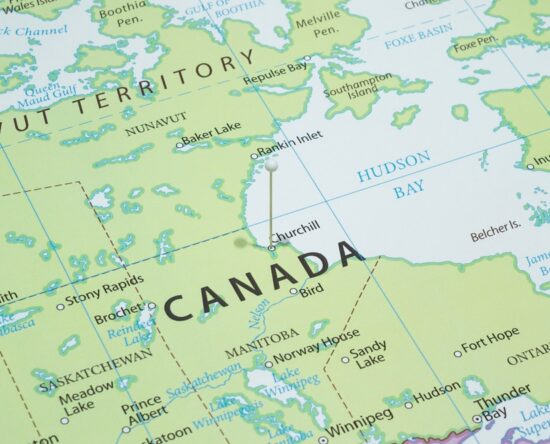
Double Patenting: A multi-jurisdictional minefield | Part III: Canada
“Canada has a rather strict system compared to other jurisdictions […], Nonetheless, it is still quite navigable in practice with the guidance of an experienced practitioner.” – Herman Cheung By Julius Melnitzer | March 16, 2026 Canada’s double patenting (DP) regime, which recognizes both “same invention” DP and “obviousness-type double patenting” (OTDP), but has no provision […]

Personality Rights Protection: Canada
“Except for Quebec, a civil law jurisdiction, Canada has very few statutory provisions covering personality rights specifically.” — Daniel Anthony Like New Zealand, Canada’s federal government and common law provinces do not recognize the general, US style “right of publicity” that protects personality rights—the right to control one’s name, image, likeness—as a property right. “Except for Quebec, […]

Personality Rights Protection: New Zealand
“AI increases the risk of misuse of personal information, both in terms of the information that businesses are feeding into, and receiving from, AI platforms.” — Thomas Huthwaite By Julius Melnitzer | March 5, 2026 With the advent of artificially-generated images and viral content, the growing ubiquity of deepfakes and dupes has become a growing concern, […]

The AI Copyright Conundrum: Memorising or Learning?
“Copyright protects reproductions, so from a legal perspective, the way you assess memorisation is by looking at the output.” – Vincent Bergeron By Julius Melnitzer | March 4, 2026 The immediate and growing controversy over whether artificial intelligence (AI) “learns” or “memorises” is raising a foundational challenge to copyright law. What’s ignited the controversy are recent […]

Double Patenting: A multi-jurisdictional minefield | Part II: New Zealand & Australia
“New Zealand’s current regime is more closely allied with other countries, including Australia, than it was before.” – Sam Ting By Julius Melnitzer | February 3, 2026 New Zealand and Australia both allow divisional applications. Although both prohibit double patenting, their laws and rules are not the same, and recent developments in New Zealand have narrowed […]
Double Patenting: A multi-jurisdictional minefield | Part I: China, Hong Kong & Southeast Asia
In China, there is no doctrine preventing an applicant from obtaining multiple patents for obvious variants, patentably indistinct subject matter, or incremental improvements, so long as the claims are not identical in scope – Michael Huang Double patenting doctrine worldwide builds on the principle that an inventor is entitled to only one patent for each invention. […]

Applied Marks: IPH’s Unique Online Trademark Registration Platform
By Julius Melnitzer | February 10, 2026 “Many business owners believe that having a company name, a domain name, and/or a trading name provides them with the exclusive right to promote their brand. But only trademark registration affords the legal right to a brand name.” — Binh Rey IPH Limited is an intellectual property (IP) services network […]

When Patent Law Meets Competition Law
By Julius Melnitzer | February 6, 2026 “Competition issues can arise at various points in the patent life cycle, including the filing stage, during licensing or commercialisation, litigation, and with respect to distribution practices.” – Chen Li Patent law confers exclusivity. Competition law shuns monopolies. The two are bound to clash. “Competition issues can arise at […]